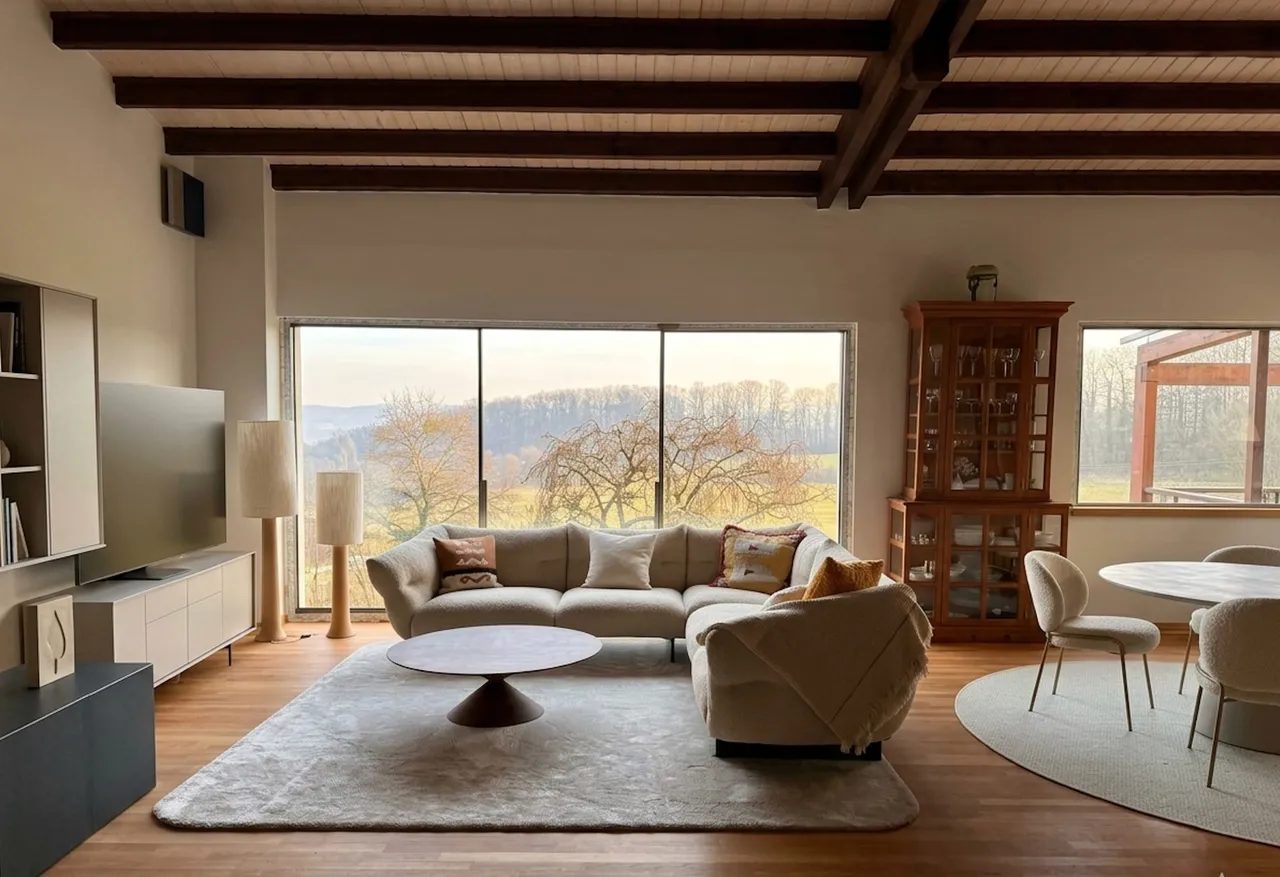
"Frameless" does not mean without structure: the frame is there, recessed in the masonry, and the sash hides behind the glass. Inside and out, only glass and view remain.
01How it works
The window is set in a deep rebate, then plaster and cladding cover the frame. The concealed sash is slimmer than the frame and disappears behind it; the handle is integrated in the profile.
02Fixed, casement, or both
Large fixed windows give the purest view; concealed-sash casements bring ventilation without breaking the line. See the Catherine project.
03Performance
Thermally broken aluminium, double or triple glazing, tested air and water tightness.
04Slim windows, slim-profile frames, steel-look: the cousins
Frameless windows are often searched under other names: slim window, slim-profile frame, minimalist window, panoramic window, fixed window. All aim at more glass and less aluminium, with different answers: the fixed window with recessed frame gives the purest view; the concealed-sash casement adds opening; the “steel-look” frame keeps a fine visible black line, like a glass partition, to draw the façade. Our casement systems borrow exactly that steel aesthetic — in thermally broken aluminium.
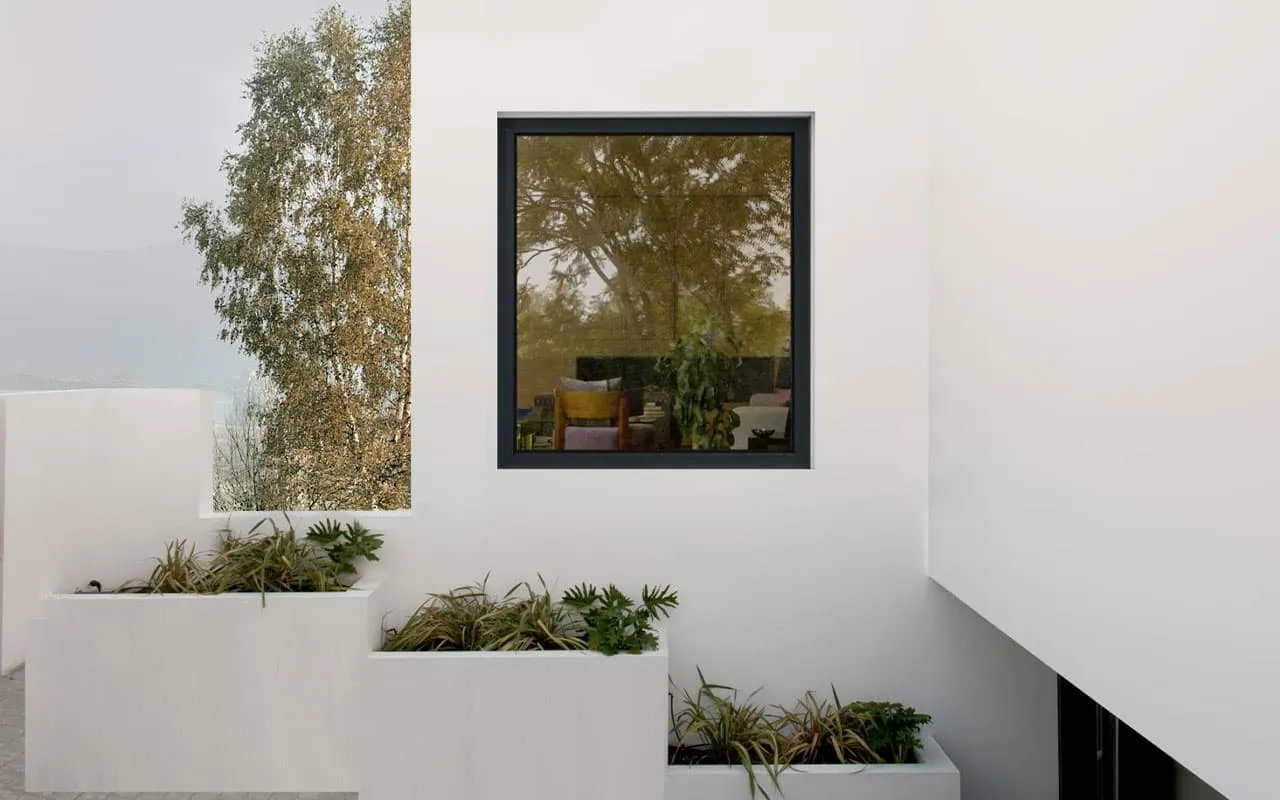 See the product · 02CasementThe elegance of steel, perfected in aluminium
05Our projects
06Frequently asked questions
Yes, with a concealed sash: invisible when closed, it opens like a classic casement.
Yes if the frame can be recessed; we check on site. In an existing façade a deep-rebate installation comes very close.
Fixed windows can be very large (several metres); casements are limited by the weight of the glazing. We validate every dimension with the manufacturer.
A slim window shows a thin but visible profile; a frameless window hides the frame in the masonry and the sash behind the glass. Both can be combined in one façade.